The Fashion Dictionary
The A-Z of fashion and sustainability terms. Click on any of these words below from the fashion dictionary to learn about them.
Noun | \ ˈak-shən \
- The bringing about of an alteration, in legislation, policy or practices, as a result of campaigning by changemakers, environment and human rights activists.
- The initiation of a legal proceeding, brought on by agitation and campaigning, demanding answers and enabling change.
Collective action by consumers is a prerequisite for radical change in the fashion industry.
Also read:
The International Accord, Levi’s, Remake, and citizen action
Action you can take to help artisans reeling from the pandemic
Noun | \ ˈär-tə-zən \
- A person or a community that produces something using skill and traditional methods, passed on through generations, often by hand and in limited quantities.
- A worker who practices a trade or a handicraft.
Artisans can be supported by choosing to buy local or buying products directly from craftsmen.
Also read:
Noun | \ ə-ˈwer-nəs\
- The quality or state of being aware of where the clothes you own come from, and how the fashion industry affects the planet and people.
- Knowledge and understanding of the item you are buying, the people making it and their working conditions, the brand you are buying from, and the policies that affect the production of the garment.
Consumer awareness ensures the buyer or consumer is in possession of the full facts regarding a product, goods, service, and consumer rights, enabling them to make informed decisions.
Also read:
Did you know, there’s plastic in your wardrobe?
Here’s what you need to know about fashion sustainability and India
Verb | \bluːwɒʃɪŋ\
- When brands/companies employ marketing tactics to appear more socially responsible than they truly are, in their functioning.
- Brands often announce employee support funds and policies that claim to help the employees in the long-term, without looking into fair wages and their current well-being.
Find meanings to other terms similar to bluewashing in the fashion dictionary.
Also read:
Market your business without resorting to bluewashing tactics
Noun | \ ˈbiz-nəs \
A commercial activity engaged in as a means of livelihood or with the sole purpose of gaining profit.
A sustainable business looks beyond just profits, providing fair wages and working conditions to the people involved, working in harmony with the planet and being transparent about the business with the customers.
Also read:
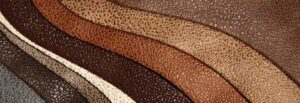
Noun |\ ˈkak-təs ˈle-t͟hər\
A leather made from the Nopal cactus, or the prickly pear, which is harvested by cutting off only the cactus leaves, so the entire plant isn’t harmed and can continue to grow.
Desserto, a Mexico-based brand, is so far the only manufacturer of cactus leather. The performance of the fabric is comparable to conventional leather, and it is said to be durable, waterproof and breathable.
Also read:
All you need to know about Cactus leather
5 more plant-based leather alternatives
Noun | \sər-kyə-ˈler-ə-tē\
- A principle driven by design that aims to eliminate waste and pollution, reuse products and materials, and regenerate.
- A system that ensures products are compostable or can be placed back into the cycle that they were bought from, to extend their lifecycle, or offer a better end-of-life solution. It ensures nothing goes to waste and everything used once, is utilised again and again.
Also read;
Kind, Mindful Donations: An example of circularity Celebrities embracing a circular lifestyle
Noun | \ˈkȯrk ˈle-t͟hər\
Fabric obtained from the cork oak (Quercus suber), which serves functions similar to animal leather.
The production of cork leather is 100% free of chemicals, making it a popular choice for accessories, furniture, yoga mats, bags and shoes.
Also read:
Noun | / ˈkō-kə-(ˌ)nət ˈle-t͟hər /
A leathery fabric, made from the organic and sustainable bacterial cellulose of coconut water, grown on agrarian waste (banana stem, sisal and hemp fibres).
Malai Biomaterials, a Kerala-based startup, is producing this PETA-certified cruelty-free vegan leather, which is strong, durable, water resistant, flexible, breathable, 100% biodegradable and also supports the local economy.
Also read:
Adjective| \ˈkäm-ˌpō-stə-bəl\
A product or a material that has the capability to naturally decay into land and become a fertilizer or manure for plants.
Compostable fabrics make for a better, planet-friendly alternative to synthetic fabrics. These natural fabrics can decompose into the land, and reduce the trash going to landfills.
Also read:
How to compost, compostable fabrics
Polyester and the plastics in our wardrobe are non-compostable
Phrase | \ kän(t)-shəs ˈlɪvɪŋ\
Conscious living is being aware and mindful of our surroundings, and making choices that do not cost the planet, or hurt the people involved.
When it comes to our clothing, conscious living is a mindful way of dressing as well as of producing garments and accessories, right from considering what raw materials are used and where they come from, to how the clothes or accessories are crafted, packaged, sold and, in the case of the wearer, consumed, looked after and, eventually, disposed of.
Also read:
Adjective | \ ˈkrü(-ə)l-tē-ˈfrē\
A product or a brand that does not harm or kill animals at any point in its production cycle.
A cosmetic product that hasn’t been tested on animals.
According to PETA, cruelty-free means that a company or brand has taken the position that it won’t allow tests on animals, including in its supply chain, for any reason, whatsoever. The ‘cruelty-free’ label is being widely used in the fashion and cosmetic industries. While it has clear implications for cosmetics, the label falls short when it comes to fashion.
Also read:
Noun | \ di-ˈspō-zə-bəl \
Designed to be used once or only a limited number of times and then thrown away.
The fast fashion model is rapidly producing high volumes of clothing at affordable prices, giving rise to a use-and-throw culture. This disposable fashion is not just harmful for the planet but has also been responsible for several human rights violations towards people in their production and manufacturing processes.
Also read:
Phrase | /e-kō- ˈgilt/
The remorse we feel every time an action, such as buying or discarding something, is potentially harmful to the environment.
Similar to buyer’s remorse, which is the regret we feel after purchasing an item, eco guilt creeps in when we buy something that’s not planet- or people-friendly, or we dispose of something without considering other alternatives.
Also read:
Is eco guilt pushing you to be better?
Mindful donations are better for your mental health too
Are women worse affected by eco guilt?
Sustainable fashion hacks to follow, so you won’t have to feel guilty
Noun | \ē-kōˈnil\
An alternative to Nylon fibre, made of ocean waste comprising Nylon 6 (semicrystalline polyamide), such as fishing nets. A recycled fibre that is also infinitely recyclable.
Also read:
ECONYL: A miracle fibre or not?
Phrase | \ ˈɛθɪkəl fa-shən \
- Ethical fashion is driven by practices that are in line with standard conventions of conduct in society and are morally driven. The focus is largely on social impact, and the principles a brand holds dear.
- Ethical fashion is to benefit people all along the supply chain, and not just those at the top. Environmental benefits may accrue from good practices that also take into account the planet.
Also read:
Why fashion sustainability is an important conversation for india
Eco-guilt: Is it pushing you to be better
Noun | \ˈferˈtrād\
An organisation helping disadvantaged farmers and workers by promoting fair wages and working conditions.
By promoting fair wages and healthier working conditions, Fairtrade enables farmers and workers to combat poverty and take better control of their lives. So far, over 1.7 million farmers and workers, and 1,822 producer organisations, across 72 countries, have benefitted from Fairtrade affiliation and certifications.
Also read:
Fairtrade and other ethical certifications you should know about
Indian workers make up 50% workforce of the fashion industry
Noun | \ ˈfa-shən \
Fashion is really everything pertaining to how we look–from our clothes and shoes, to other accessories, and even our hair and makeup. It is a form of self-expression, and is far too often driven by trends.
The fashion industry is an umbrella term for everything from raw materials, fibers or fabrics in the production stage, the manufacturing sector, retail, brands to even what happens in the post consumer stage. Currently valued at 3 trillion dollars, it is one of the biggest industries in the world.
Also read:
Why fashion sustainability is an important conversation for India
Should we be celebrating Zaras entry into resale
Helping artisans cope with the pandemic
There is plastic in your wardrobe
The International Accord, Remake, Levis and The Power of engaged citizenship
Phrase | /ˈfast ˈfa-shən/
- A design, manufacturing and marketing method focused on rapidly producing high volumes of clothing.
- A fashion business model that prioritises speed of production over quality, fair wages and labour rights.
The fast fashion model is based on constantly changing trends and low prices, driving higher sales and faster disposability of clothes.
Find the meaning of the opposite of fast fashion in the fashion dictionary also.
Also read:
How fast fashion manufacturing takes place
Fast fashion brands and worker health and safety
How fast fashion brands portray themselves to be eco-friendly when they’re not
Phrase | \ ˈgrēn ‘fa-shən \
- Green fashion is ensuring what we wear and even the processes we follow to maintain our clothes and accessories are all good for the environment and animals. There is a heavy focus on materials, including natural fabrics, recycled fibres and certified materials, and processes.
- Similar to eco-friendly fashion, green fashion aims to lower carbon footprint, and decrease the social and environmental impact of apparel production and consumption. However, it may or may not safeguard the rights of the people who make our clothes.
Also read:
Spotlight: How sustainable is hemp fibre
Make your laundry more sustainable for an eco-friendly wardrobe
Verb | \ ˈgrēn-ˌhə́ʃɪŋ \
1. Withholding of information on climate goals and impact, with or without an intention to greenwash.
2. Not talking about sustainability, to avoid scrutiny or criticism.
Companies often leave out sustainability in their communications from fear of backlash from stakeholders who believe sustainability diminishes their return on investment. As consumers, we can demand better.
Also read:
The fast fashion nobody talks about
Verb | \ ˈgrēn-ˌwɪʃɪŋ \
1. Unintentional greenwashing.
2. Companies committing to sustainability goals they cannot realistically meet.
It isn’t realistic for a brand to meet 100% of all sustainability goals. So when they commit to do so without the wherewithal to meet those commitments, they are, albeit unintentionally, greenwashing. If you see a brand declare sustainability goals that seem implausible, remember to ask them the right questions.
Also read:
Verb | \ ˈgrēn-ˌwȯ-shiŋ \
- The act or practice of making a product, policy, activity, etc. appear to be more environment-friendly or less environmentally-damaging than it really is.
- A marketing ploy used by brands, where they play upon one environment-friendly practice they may follow, even if partially, to cover up the many damaging practices they do follow.
Brands often market a single collection as ‘sustainable’ or ‘handcrafted’, neither of which necessarily implies sustainability, especially when the rest of their collections are hurting both people and planet.
Also read:
Should we be celebrating Zara’s entry into resale?
Noun | \ˈhemp \
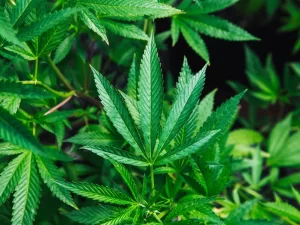
- A fine, lustrous, strong-bast fibre obtained from the hemp plant, or Cannabis Sativa, a low-impact crop with a variety of uses, from food to fashion.
- Hemp is a versatile fabric, with a multitude of qualities and uses. However, it isn’t widely available, due to limited cultivation of the plant.
Also read:
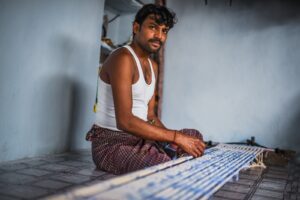
Noun| \ ˈhand ˈlüm\
- Any of the various kinds of manually-operated looms or weaving machines used to make textiles.
- Colloquially, a fabric that has been woven on a handloom.
Handlooms are an inherent part of various local, indigenous traditions. They typically use locally-grown fibres to create luxury, quality fabrics and even tapestry, and usually work in harmony with the local ecology.
Also read:
Investing in handloom fabrics can help with the climate change India’s famous handloom fabric.
Adjective| \ˈhand-ˈwō-vən\
- A product produced on a hand-operated loom or handloom.
- Woven by hand.
Championing handloom fabrics, made from the finest of fibres, are a great way to support local weavers.
Also read:
Investing in handloom fabrics can help with the climate change India’s famous handloom fabric.
Adjective| \ ˈhōm-ˈgrōn\
- Grown or produced at home in a local area.
- Belonging to a particular area.
Homegrown fashion is taking over the sustainable fashion industry. By empowering local communitiies and choosing small-batch production, they are embracing slow fashion.
Also read:
Our directory of sustainable, homegrown brands Here’s why we should buy homegrown fashion
Green Guide
4 planet-friendly natural laundry detergents
Over the last few years, Bengaluru’s Bellandur Lake has been spewing a toxic white foam, especially during heavy rains. What if we told you your laundry detergent was the culprit? That it was causing irreversible damage to the planet? And no, standard liquid detergents are
Read More >
Enjoy a planet-friendly yoga practice!
If there’s one thing we can all agree on, it’s that there’s no wellness without caring for the planet. From your yogawear, to your mats and props, we’ve got you some brands that are prettier for the planet, for the people and for you.We bring
Read More >
3 planet-friendly homegrown swimwear brands
Ever wondered what your swimwear is made of? Or, ever thought of your swimwear as more than just the sum of its cut and colour? Most of us haven’t. Well, I certainly hadn’t–despite being a swimmer! For a tropical country, the Indian swimwear market is
Read More >
5 ways to show your clothes some extra love
‘I love what you’re wearing!’ That’s how most compliments roll. But, do you love what you’re wearing? Like really love what you’re wearing? Do you show your clothes that love? Showing our clothes a little bit of extra love is a great way to make
Read More >
5 new year resolutions for a happier planet
As we step into 2024, we’re likely all getting our resolutions, for a better, healthier version of ourselves, in place. But, ever wondered if any of these resolutions could help fight the global climate crisis? Or simply just lower the pollution around us? It isn’t
Read More >
What is sustainable fashion?
Let’s be completely honest: There’s no such thing as sustainable fashion. The idea of sustainability and the nature of the fashion industry are inherently at odds with each other. According to McKinsey’s August 2020 Fashion on Climate report, the fashion industry alone contributed a staggering
Read More >

Could having a ‘Grandma hobby’ help you save the planet—and yourself?
In the edit note for a recent newsletter, I wrote about how there is one clear antidote to both, hyperconsumerism and throwaway culture: Mending. One of the responses I got was, Grandma would’ve said, ‘what’s new!’ Honestly, nothing. But seriously, everything. We’re living in times
Read More >
5 easy ways to care for your clothes
I think of my grandmother’s nicely stored Pashmina shawls… how they still look brand new after all these years. I always wonder if it's some secret technique or just the fact that we now have lost the art of storing things, especially clothes, the right
Read More >
5 other ways to do secondhand style
Secondhandadjective | ˈse-kən(d)-ˈhand Acquired after being used by another person. Not new.Used clothes offered for sale or swap.Opting for secondhand clothing and accessories is a great way to save planetary resources, as no fresh resources are used in the creation of something new. It also prolongs an
Read More >
5 reasons we should buy homegrown fashion
Are you tired of the usual fast fashion brands you’ve been buying from? Are you looking for sustainable options? Maybe… buying homegrown? Great idea!, Buying homegrown is not only a green flag for the planet, but could also be a breath of fresh air if
Read More >
How to organize gender-fluid swap parties
Fashion is a form of expression and a celebration of identity. And not everyone likes to conform to fashion rules and gender norms set by society. At Pretty As You Please, we believe dressing to express your identity is also the more sustainable thing to
Read More >
6 ways to navigate the Diwali sales in India
With the festive season come those big red banners screaming SALE, at every corner. Snagging a deal is always thrilling, but it's crucial to consider the lasting impact of our shopping decisions. It’s easy to get carried away with the frenzy of Diwali sales. But
Read More >
From field to fashion: The remarkable sustainability of hemp fiber!
Photo by Anna Auza on Unsplash Hemp, or Cannabis, is called a fibre of a hundred uses. From paper and textiles to oils, hemp gives us a whole host of products. Our favourite, of course, is the hemp fabric. The oldest
Read More >
Leather 2.0: 5 insanely cool plant-based alternatives taking the fashion world by storm!
In a previous article we published, we spoke about plant-based leathers. The wonderful part is, we live in a time and age when technology and innovation have ensured there’s no dearth of these plant-based vegan leather alternatives. As a part of Slow Fashion India’s Know
Read More >
The 2024 Tarot guide to fashioning sustainably
With a latent buzz of an upcoming recession in the air, the cards agree that living sustainably and fashionably in 2024 is going to be all about managing our money well. Toh let’s see how the cards can help us budget our style in 2024.
Read More >
Should we be buying leather?
Should we be buying leather? This is a very complicated topic, especially for us, in India. When I think of leather, I think of my gorgeous, handcrafted Pakistani mojaris. Or of my super-comfortable, super-versatile Kolhapuri chappals. And then there is a most precious possession: A
Read More >
9 ways to make your closet more sustainable… On a budget
“Why are sustainable clothes so expensive?” whined a Twitter user on my feed, about a year ago.“If you feel those clothes are too expensive, just don’t buy,” I replied. “But I need sustainable clothing!” she got back. So, I started making a list of things that
Read More >
5 plant-based leathers you need to know about
Rebecca Cappelli’s Slay, a euphemism as good as any, revealed the ugly truth behind fashion’s ‘natural materials’. The most heartbreaking for me, personally, was the reality of the leather industry. From the inhuman treatment of the animals to the harmful effects this industry poses on
Read More >
5 ways to store winter clothes better
What do I do with my winter jackets? Should I hang them or fold them up in my closet? And, the woollen sweaters? Also, what if I don’t want to pack away all my summer dresses? How do I make sure to be able to
Read More >
The 2023 Tarot Guide to Fashioning Sustainably
Living a sustainable life in a world which seems hellbent on burning down or burning out can be exhausting. We can’t do everything at its best, all the time if we were to sustain living. So we get a little help from the cards to set
Read More >
Metamorphosis: Fast fashion junkie to a slow fashionista
The sun shone brightly and I emptied myself of myself—of the version I deemed to be myself. Clothes were flung out from my balcony—an act of poetic justice. The very clothes that shaped me, my body now lay littered on the floor of my bungalow.
Read More >
The eco-newbie’s guide to greenwashing
#SustainableFashionHow sincere are brands who use that hashtag? Could they be hoodwinking you into believing they’re something they’re not? More specifically, could they be fooling you into believing they’re eco-friendly and that they stand for social justice when they really don’t? Portraying themselves as icons
Read More >
3 new-age fabrics to keep you cool
When we think of dressing for the swelteringly humid July weather, cotton is perhaps the first fabric that comes to mind. And why not! It’s a fabric with endless possibilities. And when produced and sourced ethically, it has a low-impact on both the planet and
Read More >
5 queer-owned fashion brands to look out for
Come June, and social media and store windows are flooded with depictions of the Pride Flag and numerous pride hashtags. While Pride Month does usher in queer joy, often, the support begins to taper off once the month is over. Well, we’re not here for
Read More >
The truth behind your favourite winter fabrics
Winter’s here. And, so are the winter fit checks. Be it that leather jacket you’ve been waiting to flaunt, or styling all those different layers – now is the time! But, did you know those cosy wool sweaters could be hurting the planet, and not
Read More >
5 ways to salvage your Holi clothes
When the fun of smearing each other with gulaal has died down, the festival of colours can leave you, well, a bit colourless at the plight of your clothes. If you’ve been playing with natural, organic colours, which we hope you have, getting the colour out shouldn’t
Read More >
What is fast fashion, and why we should be worried
Fast fashion is a business model wherein popular fashion brands bring out new collections, often inspired by high fashion runways, at an alarming frequency—according to some estimates, as often as twice a week. These collections are mass-produced, with little attention to production practices, quality or
Read More >
Can an unsustainably-made dress be sustainable?
Meet my one and only sparkly, sequinned dress… Let’s call her Shimmer. I bought Shimmer in 2019 from a fast fashion brand. Yes, yes, I know! But here’s the thing: I really really wanted a dress that was covered with sequins. You see, I’d never
Read More >
There’s plastic in your wardrobe!
At a workshop we recently conducted, we asked a bunch of young adults about the plastics present in their wardrobes. We got a lot of responses: Buttons, tags, hangers, packaging, suit covers… they were really going to town with their answers, but every one of
Read More >
What really makes a garment sustainable?
Sustainable clothing. Sustainably made. Sustainable dressing. Sustainable style. Sustainable fashion.Just a few of the phrases we come across all the time, when we’re talking sustainability in fashion. But what really makes a garment sustainable? Well, to be honest, there is no one-size-fits-all. Sustainability will always
Read More >
Spotlight: How sustainable is ECONYL?
The first commercially-manufactured NylonTM was developed in the 1930s, by a research team at the DuPont Fiber Company in Delaware, United States. Known as a ‘miracle fibre’, it was initially used in women’s hosiery, but has since made its way into every wardrobe. Because of
Read More >
How to get the most out of your current closet
With the constant flood of advertisements we see everywhere, it’s no wonder we start to believe that a better life (and style) is just one more purchase away. Every glossy ad and influencer post seems to promise that the next trendy piece will be the
Read More >
Is it possible to make your yoga practice plastic-free?
Short answer: Yes.Long answer: Not only is it possible, it is an imperative. You need to start removing plastics from your yoga practice, because…Your skin is absorbing microplasticsMicroplastics aren’t just polluting our water bodies, they’re polluting our bloodstreams, too. ‘And our brains and our breastmilk
Read More >
Everything you need to know about online thrifting
With the secondhand market expected to more than double, over the next 4 years, according to the GlobalData 2022 Market Sizing and Growth Estimates, at least 50% resale will happen online, by 2024. The report also revealed that 70% consumers believe thrifting has become much
Read More >
From field to fabric: Jute’s impact on sustainability and fashion
As I sifted through my mom's saree collection in search of the perfect outfit for Diwali, I came across one with a captivating golden sheen and a natural, earthy charm. The fabric, an exquisite fusion of jute and silk, was rustic and chic, all at
Read More >
The 2025 Tarot guide to fashioning sustainably
The cards reveal that 2025 is going to be the year we ask ourselves a fairly simple but hard-hitting question: What is the cost of our style? Is it worth it? For those of us who wish to chuck the kool-aid of capitalism, the cards
Read More >
Five sustainable fabrics you need to try this summer
The sun is shining, the heat is rising. The best way to stay cool, besides sipping on chilled lemonade? Wearing easy-breezy clothes that don’t stick when you sweat! What do you imagine wearing? A light cotton shirt? That’s an obvious answer for most. However, cotton
Read More >
How to organise your own swap party
Sweater weather… Festive dos… Wedding season… There’s a nip in the air, and the smell of naphthalene balls wafts out your trunks, as you dig out clothes that haven’t seen light of day in a while. It is also the time we start getting bombarded with season’s
Read More >
3 simple steps to help you make the sustainable shift
Looking to make your wardrobe more sustainable? You don’t need a complete wardrobe overhaul. In fact, you don’t need an overhaul at all. What you do need is quite the opposite. If you’re wondering how to make the switch to a more sustainable fashion experience,
Read More >
Circular fashion: What does it really mean?
You’ve heard the term tossed around quite a bit. Circular fashion. Sometimes, just circular. Or circularity. Brands use it like it’s a magic spell, all set to take away the evils inherent in the fashion industry. But is that so? Also, more importantly, what does
Read More >
The anatomy of a sustainable wardrobe
Have you ever felt the more clothes you have, the more muddled your styling choices become? When I look back to a time I had fewer clothes, I realise was able to make quicker, better styling choices—choices that reflected my personal style better. Over the
Read More >
‘Where can I rent clothes from?’ We’ve got you covered
The global clothing rental market is estimated to grow to US$ 2.08 Billion, by 2025, with a CAGR of 8.7%. And yet, fashion rental is nascent in India. According to research, renting one item of clothing can help save up to 24% water, 6% energy
Read More >
How to restore your old saris
Some saris are more than just a garment. They are a sentiment. Even more so when they hold not just your own memories but also those of your loved ones. I’ve been rather fortunate to have inherited some very special saris. From family and friends.
Read More >
Microplastics: A not-so-micro fashion problem
Plastic drink bottles, plastic packaging material, plastic in our clothes… It is estimated that anywhere between 6 and 15 million tonnes of plastic, representing 2-4% of global production, enters the environment every year. But were you aware that plastics have also made their way into
Read More >
V-Day gifts the planet loves
Looking for last-minute Valentine’s Day gifts? Nothing says love like a thoughtfully-chosen present. We’ve got you some planet-friendly options that are great additions to their lifestyle, ethically made, well-designed, and, in some cases, bring out the animal lover in you, too. Classic Shoulder Bag by
Read More >
Looking for planet-friendly Rakhis? These brands have just what you’re looking for
It’s that time of year again, when siblings renew their contracts with a fancy string of thread. Last year, rakhis worth ₹12,000 crores were sold in India. Taking various price differentials into account, that would amount to approximately 100 crore rakhis, most of which were
Read More >
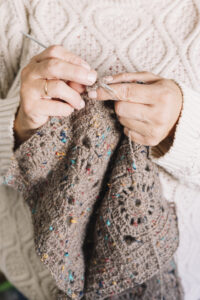
5 things to know about renting clothes
Renting clothes is a great way to cut down on your fashion footprint. It helps keep your looks fresh and occasion appropriate, without you having to buy new for what’s likely to be a one-time wear. However, there are a few things to be mindful
Read More >
9 things to keep in mind when organizing a swap party… From an expert
I founded The Shift, India, in 2022, in an endeavour to redefine fashion norms, by empowering people to contribute to a more conscious, circular fashion industry. We believe, the trusted way to reduce the impact of our clothes, on the environment, is by increasing their
Read More >
Looking to make your period more sustainable? Period underwear might be your answer.
Green the red, they told us. In India, sanitary napkins are responsible for 1,13,000 tonnes of waste, annually. This is further aggravated by the lack of proper solid waste management infrastructure, which means most of these pads are handled—literally—by waste pickers. And that, is only
Read More >
The 10 ethical fashion certifications you need to know about
How do you figure out whether a brand or product is true to its claims or whether it’s just greenwashing its way through? Well, the one way to be assured of the traceability of the supply chain and the transparency of the manufacturing process is
Read More >
Forever Chemicals: What are PFAS
Flame retardant. Wrinkle-free. Stain-resistant. The ‘non-stick’ version of clothing—quite literally. A few years ago, all hell broke loose, when studies found that Teflon, that magic non-stick coating in our cooking pans, was, in fact, cancer-causing. Teflon was made from a group of chemicals calls Per-
Read More >
5 planet-friendly gifting ideas for men
Gifting is tough. We all want to surprise our loved ones with the most unique, thoughtful gifts; something they will cherish for a long time. But fresh ideas are hard to come by. Buying gifts for the men in your life can be even more
Read More >
8 ways a conscious closet can promote wellness
According to the Global Wellness Institute, wellness is the active pursuit of choices, activities and lifestyles that lead to a state of holistic health. As per most models, there are at least six pillars of wellness: Physical, mental, emotional, social, spiritual and environmental. Some models
Read More >
Make your laundry more sustainable for an eco-friendly wardrobe
The most sustainable garment is the one already in your wardrobe.’ - Orsola de Castro, co-founder, Fashion Revolution Sustainability can often be achieved by just carefully observing and correcting little things we do every day. Like our laundry! The average family does anywhere between 8 to 10
Read More >
3 fashion brands that upcycle waste fabric
As the world around us is increasingly becoming aware of the implications of discarded waste on the planet, we are moving to better, sustainable options. And, so are the brands. They are incorporating product designs with planet-friendly solutions like recycling, upcycling and zero-waste.This World Environment
Read More >
5 reasons you need to buy from homegrown activewear brands
Nike, Puma, Adidas, Decathlon… these are the first names that come to mind when we think of activewear. These global giants have dominated the activewear industry for decades now. According to McKinsey’s ‘Sporting goods 2023: The need for resilience in a world in disarray’ report,
Read More >
Three sustainable skills to learn
Ensuring the longevity of your clothes is key to sustainability. That, and actually using the clothes that are in your closet. Stitching and upcycling may not be everybody’s cup of tea, but there are a few simple sustainable skills that can go a long way
Read More >
3 items you definitely should be thrifting
Thrifting embodies a dual purpose: Marrying fashion with sustainability. If you love thrifting, you probably understand its economic value and its environmental impact. This mindful practice directly curtails the demand for new production, resulting in reduced waste and carbon emissions. But if you’re new to
Read More >Adjective \ in-ˈdi-jə-nəs \
- Living or occurring naturally in a particular region or environment.
- Of or relating to the native inhabitants of a place.
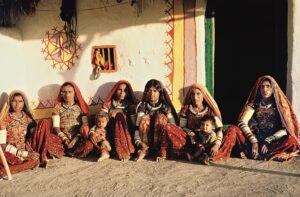
Indigenous crafts, created by the communities or people known to be the earliest inhabitants of a place, have developed over centuries, in harmony with the local ecosystems, and are inherently better for the environment while also providing economic security to the people who make them.
Find meanings to other terms similar to indigenous in the fashion dictionary.
Also read:
Crafts of India: Kanjivaram Silks
Traditional Cultural Expressions: The backbone of Indigenous communities
Noun | \ jēnz\
Pants made from denim, a durable twilled cotton cloth, known for its sturdiness.
Find meanings to other textile terms in the fashion dictionary.
Also read:
5 ways to salvage your holi clothes
Make your laundry more sustainable for an eco friendly wardrobe
The International Accord, Remake, Levis and the power of engaged citizenship
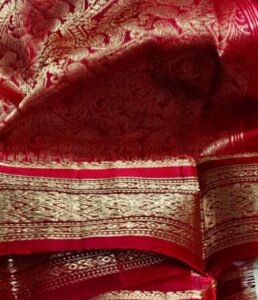
Noun | \ kaːɲdʑivaɾam\
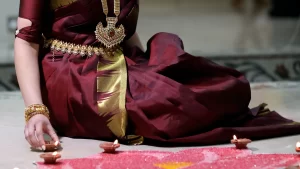
Also known as Kanjivaram, Kanjeevarum, Kanchipuram. One of the most prized hand-woven silks in the world, known for their saris. Kanjeevaram saris have a quality and feel like no other, with their tradition going back about 400 years. An original Kanjivaram can weigh up to two kilos, due to the pure gold and silver zari weave.
Find meanings to other textile terms in the fashion dictionary.
Also read:
Noun| \ˈkä-dē\
A hand-spun and handwoven fabric native to India.
Khadi’s rich history is rooted in India’s independance. Created entirely with hand, using locally-grown cotton, Khadi is a very sustainable fabric.
Also read:
Noun | \ ˈlȯn-drē \
- Clothes that have been or are to be washed.
- The act of washing clothes and linen.
- A commercial establishment that provides cleaning services for clothes.
According to WRAP UK, laundry accounts for one quarter of the carbon footprint of the clothing sector. Better laundry practices can go a long way in ensuring sustainability in our wardrobes.
Also read:
Make your laundry more sustainable for an eco-friendly wardrobe
Washing polyester garments releases microplastics into the environment
Phrase | \ ‘mä-dərn slā-v(ə-)rē \
- The exploitation for commercial gain in a capitalist system.
- Employing people in a profitable business without the promise of fair wages or safe working conditions.
Modern slavery is a common concept in the garment industry, where garment workers are employed in subpar working conditions, which are often unsafe, unsanitary and violate their basic human rights, for a basic minimum wage, often less than what is required to meet the cost of living. Wage theft and gender-based violence are common occurrences.
Also read:
The International Accord seeks to delegitimise modern slavery
India is one of the largest garment manufacturers in the world
Sustainable businesses pay fair wages and create healthy work environments for garment workers
Phrase | \ ‘mä-dərn slā-v(ə-)rē \
A leather-like fabric made from mycelium, the vegetative part of a fungus, considered one of the best plant-based alternatives to animal leather.
Mushroom leather is totally biodegradable and compostable. The process of manufacturing this leather is a closed-loop process, making it cheaper and more environment-friendly.
Also read:
Noun | \ ˈnī-ˌlän \
- A synthetic fibre, made from petrochemicals, used in clothing.
- Developed in the 1930s, nylon was the first ever fully synthetic fibre to be introduced into our clothing. The target market was women’s silk hosiery, promoting nylon stockings as far stronger and more affordable than silk.
Find meanings to other terms similar to nylon in the fashion dictionary.
Also read:
Hemp promises a sustainable alternative to nylon
Adjective \ ȯr-ˈga-nik \
- Related to or derived from a living organism, without human interference in the process.
- Developing or growing in a natural manner, without any artificial impetus.
- Involving the use of agricultural products produced solely from naturally-occuring varieties of plants (as opposed to genetically-modified varieties), solely with the help of plant- or animal-based feed and/or fertilizer, without the use of chemically-formulated fertilizers, growth stimulants, antibiotics or pesticides.
Organic cotton is grown using methods and materials where the production replenishes and maintains the soil fertility, without the use of genetically-modified seeds, pesticides or fertilizers. Ideally, the crop is also rain-fed. GOTS certifies organic cotton as well as products made from organic cotton, so you can be sure of what you’re buying.
Find meanings to other terms similar to organic in the fashion dictionary.
Also read:
Clothes made from GOTS-certified 100% organic cotton
Noun| \ ˌō-vər-kən-ˈsəm(p)-shən\
- A situation where consumers/customers are consuming unreasonably excessive quantities of something.
The fast fashion business model is designed to promote overconsumption, through fast-changing trends, unbelievable discount sales, marketing gimmicks and brands tapping into FOMO. Overconsumption leads us to treat our clothes as disposable, and is a leading cause of waste in landfills.
Also read:
Noun | \ paɪnəpəl ˈle-t͟hər\
The pineapple leather patented by Ananas Anam. A natural, non-woven material made from waste pineapple leaves, it’s a circular, bio-based option to animal leather with many of the same qualities.
Pineapple leather is versatile with its texture and colours, and is almost 30% cheaper than traditional leather. As of today, it’s being used by more than 500 manufacturers for accessories, handbags, shoes, outerwear, home furnishings and even automotive upholstery.
Also read:
Noun | /ˈpin-a-ˈteks\
- A natural, non-woven material made from waste pineapple leaves.
- A circular, bio-based option to animal leather with many of the same qualities.
Pineapple leather is currently being produced by only one company, Ananas Anam, trademarked with the name Piñatex.
Also read:
Noun | \ ˈplant-ˈbāst ˈle-t͟hər\
A leather made entirely from plant products, especially agricultural waste, and not animal skin, unlike traditional leather.
The most popular plant-based leathers include those made from mushrooms, pineapples, banana fibre, apple peels, coconut waste, cork and cactus.
Also read:
Noun | \ˈpä-lə-sē\
A definite course or method of action that takes into account specific conditions, and guides and determines present and future decisions.
Policies are intended to drive a change for the better, in the fashion industry. Especially, setting rules and regulations that protect the workers from workplace health and safety hazards as well as human rights’ violations. And, saving the planet from any immediate or long-lasting threats.
Also read:
The power of advocacy, policy making and engaged citizenship
Why is there a need for new policies governing fashion in India?
Noun | \ ˈpä-lē-ˌe-stər \
- A polyamide, polyester is a fabric made from petrochemicals.
- A popular high-performance fabric used in active wear, and as a cheap substitute for more exquisite natural fabrics like silk.
Made from non-renewable fossil fuels, such as petroleum, polyester gained popularity in the 1970s, in the form of cheap suits, which were popular at the time. Majorly used in sports and leisure wear, high-performance fleeces, swimsuits and athletic clothing, because of its sweat-wicking and stretch properties, polyester permeates most of the garment industry today.
Find meanings to other terms similar to polyester in the fashion dictionary.
Also read:
Noun | \kwɑləti\
- The degree to which a garment or accessory meets the customer’s expectations.
- Pertaining to the production value, finish and durability of a garment or accessory.
Choosing quality clothing ensures your clothes last longer, have a more viable end-of-life solution, you need to buy less, making not just the particular item sustainable, but adding to the overall sustainability of your wardrobe.
Also read:
Crafts of India
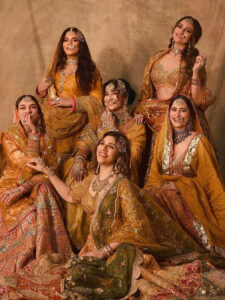
Sustainable dressing, the Heeramandi way
The mesmerising couture showcased in the web series, Heeramandi, may be your next inspo for sustainable dressing. We are telling you how. Recreate the vintage vibe. Want to dress up the Heeramandi way? It’s easier to recreate the vintage vibe than you think. Get creative: The
Read More >
Kanjivaram Silks: Origin, designs and techniques
Location: Kanchipuram, Tamil Nadu Kanjivaram, Kanjeevarum or Kanchipuram silks, are one of the most prized hand-woven silks in the world, known for their saris that have a quality and feel like no other, with their tradition going back about 400 years. The extremely sturdy saris
Read More >
Chikankari: Origin, designs and techniques
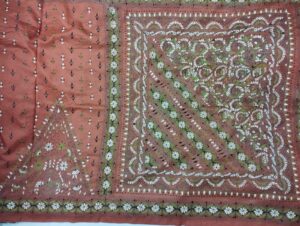
Location: Lucknow, Uttar Pradesh Chikankari is a hand embroidery style celebrated for its exquisite craftsmanship and delicate charm. Mostly associated with royalty and Nawabi culture, this timeless art form is nothing short of legendary. Its roots can be traced back to Persia, though the modern
Read More >
Phulkari Embroidery: Origin, designs and techniques
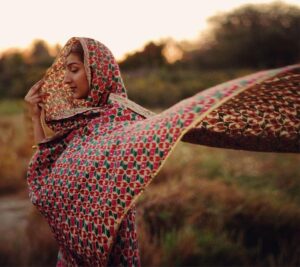
Location: Punjab region Phulkari, made up of two Punjabi words ‘phul’ meaning flower and ‘kari’ meaning work, translates to flower work or floral work. It is a unique technique of embroidery usually spun on charkhas, and is common to shawls and odhanis/odhnis (headscarves). Dating back to
Read More >
Craft in the age of climate crisis: What is the correlation between crafts and climate?
On November 17, 2023, the Earth briefly crossed the 2° warming mark that scientists have been warning us against. Well, can’t say we didn’t see this coming! Climate change is real and this only reminds us of the urgent need to address and tackle the
Read More >
Kashidakari: The art and living legacy of Kashmiri Embroidery
Kashmir is where shopaholics and wanderers find their Utopia. Kashmiri embroidery, or Kashidakari, is known for its intricate and finely-detailed patterns, often inspired by nature, flora, fauna and Persian motifs. A kaleidoscope of colours, Kashidakari is a way to empower hands when the fields are
Read More >
Kantha Stitch: Origin, designs & techniques
Location: West Bengal A few years back I had the privilege of visiting Shanti Niketan, the ashram initiated by Sri Rabindranath Tagore, near Kolkata. On arriving, I was fascinated to discover it was the epicentre of the OG upcycling Indian craft, Kantha stitch embroidery. I
Read More >
Traditional Cultural Expressions: The backbone of the Indigenous community
Set in a colourful backdrop, with Bollywood’s It girl Jacqueline Fernandes setting the screen on fire, Badhshah’s Genda Phool has all the makings of a hit number. Not too long back, it was a constant feature, being blasted at weddings, festivals, parties, any celebration, anytime, anywhere. People were
Read More >
5 reasons we should buy homegrown fashion
Are you tired of the usual fast fashion brands you’ve been buying from? Are you looking for sustainable options? Maybe… buying homegrown? Great idea!, Buying homegrown is not only a green flag for the planet, but could also be a breath of fresh air if
Read More >Verb| \ rē-ˈsī-kəl\
- Reuse or make products available for reuse, through processes of biochemical degradation or modification.
- To make ready for reuse
Also read:
Thrifting, preloved and sustainability in the secondhand fashion market
There’s plastic in your wardrobe!
Verb | \ ri-ˈper\
- Restoring something to to its original condition, or enough to make it usable.
- The act of fixing something with an intention to retain its quality or even give it a new form that may be better in quality.
In fashion, repair or mending is a crucial step in extending the life of your garment, and adopting circularity. Repairing can be as small as fixing a button and resewing a hem, or can involve more elaborate techniques, including embroidery, patchwork and even dyeing.
Also read:
Repairing and other easy ways to care for your clothes
Noun/ ˈrē-ˌtāl ˈther-ə-pē
- The act of going shopping and buying things in order to make yourself feel more cheerful.
Trendy, as retail therapy may sound, shopping as a reward or consolation is terrible for the planet and for our mental health. Not to mention, the hole it burns in your pocket.
Also read:
Retail therapy: Why it’s a terrible idea! – Pretty as you please
Noun | \ seɪl \
- The act of exchanging something with money.
- An event when goods are sold at a lower price than their marked selling price.
Fashion sales are a massive contributor to the unwanted waste generated during the festive season. These sales tap into the consumer psyche of FOMO, and the urge to snag a bargain, pushing us to make unwanted purchases, many of which eventually end up in landfill.
Also read:
Adjective | \ ˈse-kən(d)-ˈhand \
- Acquired after being used by another person.
- Not new.
- Used clothes offered for sale or swap.
Opting for secondhand clothing and accessories is a great way to save planetary resources, as no fresh resources are used in the creation of something new. It also prolongs an item’s lifecycle.
Also read:
Thrifting, preloved and sustainability in the secondhand fashion market
The anatomy of a sustainable wardrobe
How to organise your own swap party
Phrase | \ slo ‘fa-shən\
- Slow fashion is an ideology and practice that challenges the idea of fashion as cheap and disposable, as propagated by the fashion industry.
- Slow fashion is a deliberate way of consuming fashion that focuses on wearing what you have, repairing, buying only what you absolutely need and, even then, choosing handmade over machine-made.
Also read:
Thrifting, preloved and sustainability in the second hand fashion market
The International Accord Remake, Levis and The Power of engaged citizenship
Noun | \ˈspan-ˌdeks\
- A collective term for various elastic textile fibers made chiefly of polyurethane.
- It has all the strength of polyester but acts like rubber and can stretch up to five times its length.
Over the last few decades, spandex has made its way into a variety of clothing, to lend it some stretch. Particularly popular in active wear and jeggings.
Find meanings to other terms similar to spandex in the fashion dictionary.
Also read:
Phrase | \ sə-ˈstā-nə-bəl di-ˈzīn \
- Product design aimed at building the future, not just a product.
- Viewing design as a process that empowers designers to better evaluate and anticipate the environmental, economical and social impacts as well as cost of production.
Sustainability is as much about process as it is about product, and begins with the design of an item. When a product is envisioned in a sustainable fashion, it lasts longer and has a lower overall impact on the planet, as well as on the people who make our clothes.
Also read;
Why fashion sustainability is an important conversation for India
Verb | \ ˈthriftiŋ \
- Buying or selling secondhand articles, especially clothes.
- Secondhand shopping.
Thrifting does not require clothes to be vintage, nor does it require the clothes be in a particular store or sold by a particular vendor. It simply requires that the clothes you are purchasing have been previously owned by another.
Also read:
Thrifting, preloved and sustainability in the secondhand fashion market
noun | \ tran(t)s-ˈper-ən(t)-sē\
- The quality or state of being transparent.
- A system of operating where nothing is hidden.
- The practice of openly sharing information about how, where, and by whom a product was made.
Transparency is a cornerstone of sustainability. Being transparent means publishing all information about every point involved in the production process, from start to finish, from the fields to the store shelves.
Find meanings to other terms similar to transparency in the fashion dictionary.
Also read:
verb | \ ˈəp-ˌsī-kəl
- To recycle in a way that the resulting product is of a higher value than the original item.
- To create an object of greater value from a discarded object of lesser value.
Unlike recycling, upcycling does not require additional natural or chemical resources to be used in the process. Though it does, sometimes, need exceptional skill and labour.
Also read:
Noun | \ ˈvin-tij \
- Of old, recognized and enduring interest, importance or quality.
- A classic.
- Dating from and characteristic of a past era.
Vintage clothing and accessories are a great way to make a style statement. Plus, they’re great for the environment!
Find meanings to related terms in the fashion dictionary
Also read:
Thrifting, preloved and sustainability in the secondhand fashion market
Adjective| \ ˈvē-gən ˈfa-shən
- The vegan label on a product entails that it does not contain any substances of animal origin
Mostly associated with food or lifestyle, the term vegan has gained massive popularity lately, in the fashion and beauty industries. The labels vegan and cruelty-free can be used interchangeably in the fashion industry, and they simply mean that there was no use of animal-based materials, but do not inherently imply eco-friendliness of the product.
Also read:
Phrase| \ vəʊt wɪð jɔː ˈmʌni \
1. Supporting businesses whose practices align with your values.
2. Not spending your money on brands and businesses that have been associated with environmental and human exploitation.
‘Every time you spend money, you’re casting a vote for the kind of world you want.’ — Anna Lappe
When we buy from corporations that do not care about environmental impact, that greenwash, and that do not pay fair wages, we are endorsing them and their unfair practices, besides giving them more money to carry on their work. By buying from smaller, more sustainable businesses, we are enabling a fairer world to thrive.
Also read:
What is fast fashion, and why should we be worried.
noun | \ ˈwȯr-ˌdrōb \
- A cabinet to store clothes in.
- A collection of apparel and accessories, belonging to a person, or created for an activity (like film or theatre production).
The clothes and accessories we wear–our wardrobes, essentially comprising all the items we have owned till date.
Also read:
The anatomy of a sustainable wardrobe
9 ways to make your closet more sustainable… On a budget
There’s plastic in your wardrobe!
Make your laundry more sustainable for an eco-friendly wardrobe
noun | \ ˈwərk-mən-ˌship\
- The skill of a craftsperson or artisan
- The quality of something made, as by an artisan.
Workmanship is a skill passed down the generations, along with the understanding of quality and sustainability of a product. Appreciation of it is integral to slow, conscious and ethical fashion.
Also read:
Phrase | \ ˈzir-(ˌ)ō-wāst \
- Creating products in a manner that eliminates the creation of waste.
- Repurposing waste generated in the production of an item, so it becomes a product with value.
Part of the broader sustainable fashion movement, pre-consumer zero-waste in fashion eliminates waste during manufacture, such as from the cutting process or even from defective bolts. Post-consumer zero-waste generates new clothing or accessories from offcuts and secondhand clothing, creating a new product at the end of life.
Also read:
You can swap clothes that are going to waste
How to throw a low-waste kids’ party
Conscious Closets
Can an unsustainably-made dress be sustainable?
Meet my one and only sparkly, sequinned dress… Let’s call her Shimmer. I bought Shimmer in 2019 from a fast fashion brand. Yes, yes, I know! But here’s the thing: I really really wanted a dress that was covered with sequins. You see, I’d never
Read More >
The Festive Fit Check
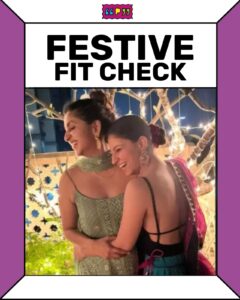
Festivals are a great time to dress up. And while popular culture may have you believe that you need to shop more to look your best, we’re here to tell you there are other ways to ace your look. Take a cue from our team.
Read More >
No new clothes, but make it 5 years: Faheem Ruhani
Mumbai-based Faheem Ruhani, Managing Editor at The Conscious Empire, has bought no new clothes for over 5 years, now. ‘The last time I went shopping for clothes was in February of 2019,’ he reveals. ‘I bought four shirts at a Zodiac sale. Even as I
Read More >
Festive Fit Check: Colours of the Earth
Years ago, a popular newspaper ran a campaign, encouraging people to wear specific colours on each day of Navratri. Today, this practice has almost become tradition. Few recall how this began, and the colours have come to be de rigeur for the festive season. People
Read More >
Handmade minimalism: Anjali Gupta
Handmade Minimalism Anjali Gupta has a closet full of tailor-made pant suits, in a variety of colours and cuts, perfectly fitted to her size and shape. Most of us, in India, are familiar with the local tailor. Our go-to person, for a better fit—a nip
Read More >
The serial borrower: Simrita Kaur
Simrita Kaur can’t remember the last time she bought new clothes that weren’t a ‘necessity’. ‘As the younger of two sisters, I grew up wearing hand-me-downs,’ she says. “Of course, back then, it wasn’t a conscious decision, just a way of life.’ But as the
Read More >
Metamorphosis: Fast fashion junkie to a slow fashionista
The sun shone brightly and I emptied myself of myself—of the version I deemed to be myself. Clothes were flung out from my balcony—an act of poetic justice. The very clothes that shaped me, my body now lay littered on the floor of my bungalow.
Read More >
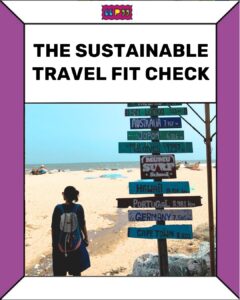
The sustainable travel fit check
Travel demands a lot of shopping. In preparation for your journey and destination, or as a must-do while on vacation. While we 💯 recommend shopping (within reason), to support the local economy, we’ve got style cues on saving the planet—and some money—while prepping for your
Read More >
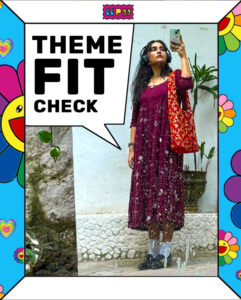
Theme fit check
Hitting the mall every time you have a theme-based event to attend? Looking for ways to look stylish, without spending a fortune is usually a task. But, what if we told you we have a few tried-and-tested ideas for you? Take cues from our team
Read More >
Mission Share Forward: Kind, mindful donations
When my mother passed, she left behind not just her legacy, but a crazy number of saris! Images courtesy: Belina Kantamneni My daughter and I had our pick. I donated many of them. Even turned a few into kurtas and dresses
Read More >
The conscious bride: Shivani Singh
Shivani Singh, the South Asia co-community organiser for Remake, has long been an advocate for sustainability. ‘I always wanted that personal touch to everything I wore, something that has empowered at least a few people along the way,’ says Shivani. And, her wedding wasn’t any
Read More >
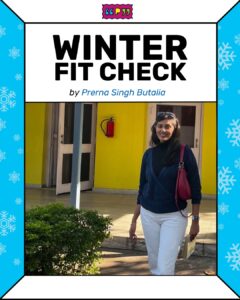
Winter fit check
Embrace the season with style and a generous dose of sustainability. Swipe through for inspiration and ideas to explore the endless possibilities of slaying your winter look with planet-friendly chic.
Read More >
The ethical maximalist: Smriti Lamech
The Ethical Maximalist Writer and entrepreneur Smriti Lamech has a closet full of pretty things, a home bursting with colour, and a heart full of love towards the planet and its people. Because no, these are not mutually exclusive! For a while now, the popular
Read More >Celebrity Fashion
Have you seen these celebrity outfit repeats?
Wear. Rewear. Upcycle and Wear. For too long, now, celebrities (and celebrity kids) have made fashion statements by never repeating an outfit, at least not in public. But times, they are a-changing. It's about time 'use and throw' was a thing of the past, and
Read More >
Sustainable fashion icon: Billie Eilish
Pop sensation Billie Eilish has been leading the global charts for a while. But what’s caught our attention is her commitment and advocacy for climate change, through her ‘green concerts’. Yes, you read that right: Eilish’s green concerts are designed to be planet-friendly, with minimal
Read More >
Sustainable fashion icon: Kate Middleton
The Princess of Wales is known for her trendsetting fashion looks. She exudes charm, luxury, but more than anything, she is breaking stereotypes and how. And, that’s exactly what caught our attention: Her love affair with sustainable fashion. Following in the footsteps of her late
Read More >Sustainable fashion icon: Alia Bhatt
When Alia Bhatt and Ranbir Kapoor tied the knot, on April 14th, the world waited, with baited breaths, for pictures to emerge. As did we. For our own reasons. The dreaminess of a celeb wedding aside, what we, at Pretty As You Please, love most
Read More >The sustainable fashion icon we need: Jane Fonda
In 2019, Hollywood actor and fitness icon Jane Fonda bought herself a flaming red coat, and declared it was going to be the last garment she ever buys. Interestingly, the red coat wasn’t bought without reason either. In October that year, she joined hands with
Read More >
Have a Sustainably Stylish New Year
The new year is upon us. New beginnings. New resolutions. But also… New clothes for that New Year’s Eve party. Or, maybe not?According to a Euromonitor International report, the average piece of clothing is worn only seven times, before it is discarded. This is especially
Read More >
Sustainable dressing, the Heeramandi way
The mesmerising couture showcased in the web series, Heeramandi, may be your next inspo for sustainable dressing. We are telling you how. Recreate the vintage vibe. Want to dress up the Heeramandi way? It’s easier to recreate the vintage vibe than you think. Get creative: The
Read More >
The worst of 2023: Fashion’s most regrettable moments
From tone deaf campaigns to carbon emitting pop mania, we’re bringing to you moments we wish didn’t happen in fashion history. Taylor Swift has been in the news for her frequent flights. But her private jet isn’t the only thing blowing out massive quantities of
Read More >
The best of 2023: The year’s most iconic sustainable fashion moments
From celebs taking the sustainable route to material innovations and policy, we’ve put together the most sustainably stylish moments of 2023. Alia Bhatt once again brought out the sustainable fashion icon in her, by rewearing her Sabyasachi wedding sari to receive her National Award for
Read More >