
Short answer: Yes.
Long answer: Not only is it possible, it is an imperative. You need to start removing plastics from your yoga practice, because…
Your skin is absorbing microplastics
Microplastics aren’t just polluting our water bodies, they’re polluting our bloodstreams, too. ‘And our brains and our breastmilk and our testicles,’ adds Arjun Dennis Paul, a yoga teacher and co-founder of Tarasa, a brand that makes plastic-free yoga wear and yoga mats. Of course, a lot of these microplastics have been ingested by us, when we eat from plastic containers, drink from plastic bottles and, worse, put plastic in the microwave. But we’re also absorbing plastics from the environment, more specifically, from the clothes we wear.
‘Most think of polyester as a high-performance fabric, because it’s labelled ‘sweat-wicking’,’ says Shubham Tyagi, founder of yoga wear brand KSHM, and yoga accessories brand, Coreasana. ‘But the truth is, polyester doesn’t let your sweat evaporate—it traps heat and moisture against your skin. Studies have even shown that polyester retains more odour-causing bacteria and synthetic blends can leach harmful chemicals like phthalates and PFAS, when mixed with sweat. And since our skin is our largest organ, that’s a big deal! It means what we wear could be impacting our hormones, energy, and overall health.’
The medical community is still divided over this, but multiple scientific studies have revealed that microplastics can leach through the pores of our skin, especially when we sweat, which leaves our pored enlarged. ‘Plastics release endocrine disrupting chemicals such as BPA, phthalates and are a source of heavy metals, too,’ explains Dr Simi Sugathan, a risk assessment scientist and founder of MAYAI. ‘There are data gaps in terms of leachates study and dermal toxicity, but we know that plastic-based fabrics (polyester, polyamide, spandex, recycled polyester, recycled nylon, etc) release toxic chemicals during the process of making as well as when this fabric is directly in contact with the human skin.’
Long story short: You’re risking microplastic absorption just by wearing tight-fitting yoga pants and sports bras made from polyester. And, you’re making it worse by sweating into them, especially if you’re big on ‘hot yoga’.
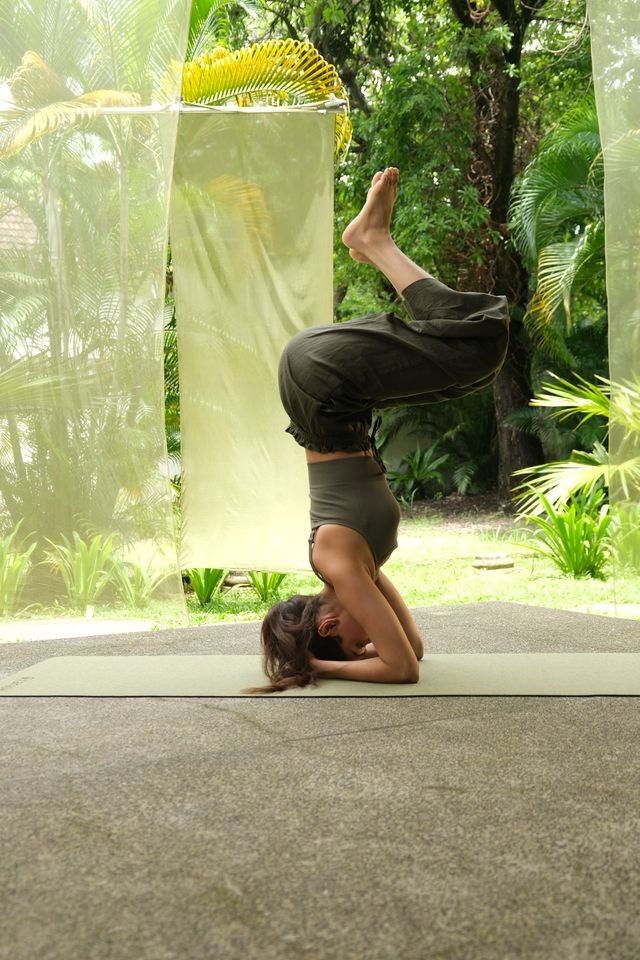
The solution: Ideally, pick loose-fitting clothes, made in cotton, linen and hemp. But if you’re addicted to stuff that must fit, you could opt for cotton and bamboo options with minimal spandex.
Brands to explore: Proyog, Tarasa, Carbon Tree, Athlos, Akiso, Kshm


You’re inhaling toxic chemicals
Azodicarbonamide (ADA) isn’t just a mouthful, it’s a nostrilful, too. Popularly called the ‘yoga mat chemical’, ADA is what gives off that ‘new mat smell’. Most synthetic yoga mats are made of PU, TPE or PVC. They contain latex and phthalates, besides two categories of chemicals known as Volatile Oil Compounds (VOCs) and Polycyclic Aromatic Hydrocarbons (PAHs). Together, or even individually, these chemicals make for a heady cocktail that can easily be inhaled. These chemicals have been proven to be carcinogens and endocrine disruptors. Honestly, it sounds counterintuitive to be engaging in a practice meant to elevate your sense of well-being while inhaling chemicals that could cause untold damage to your body. ‘If it’s not good for the planet, it’s certainly not good for your health,’ confirms Dr Sugathan.
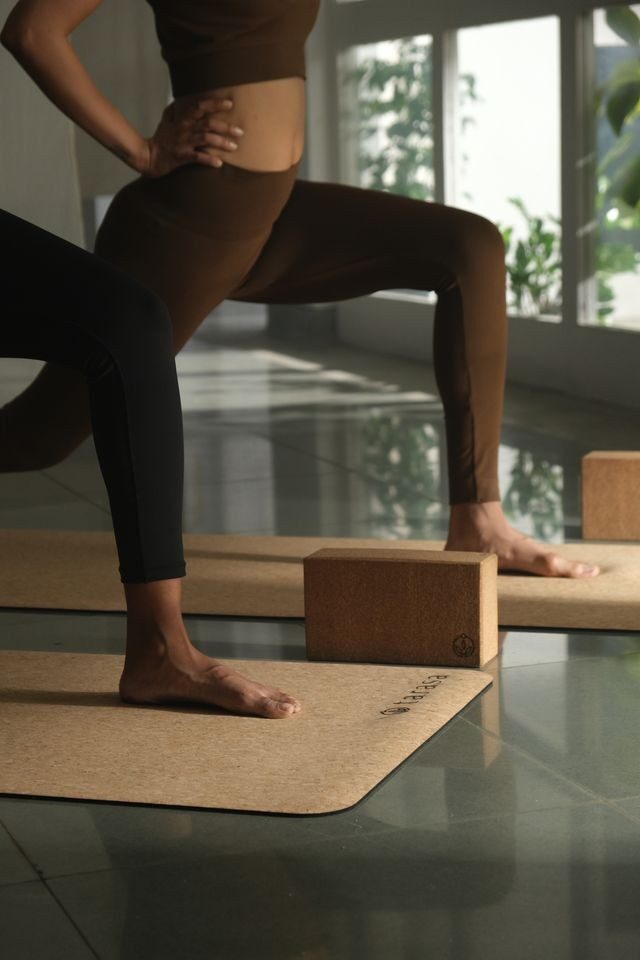
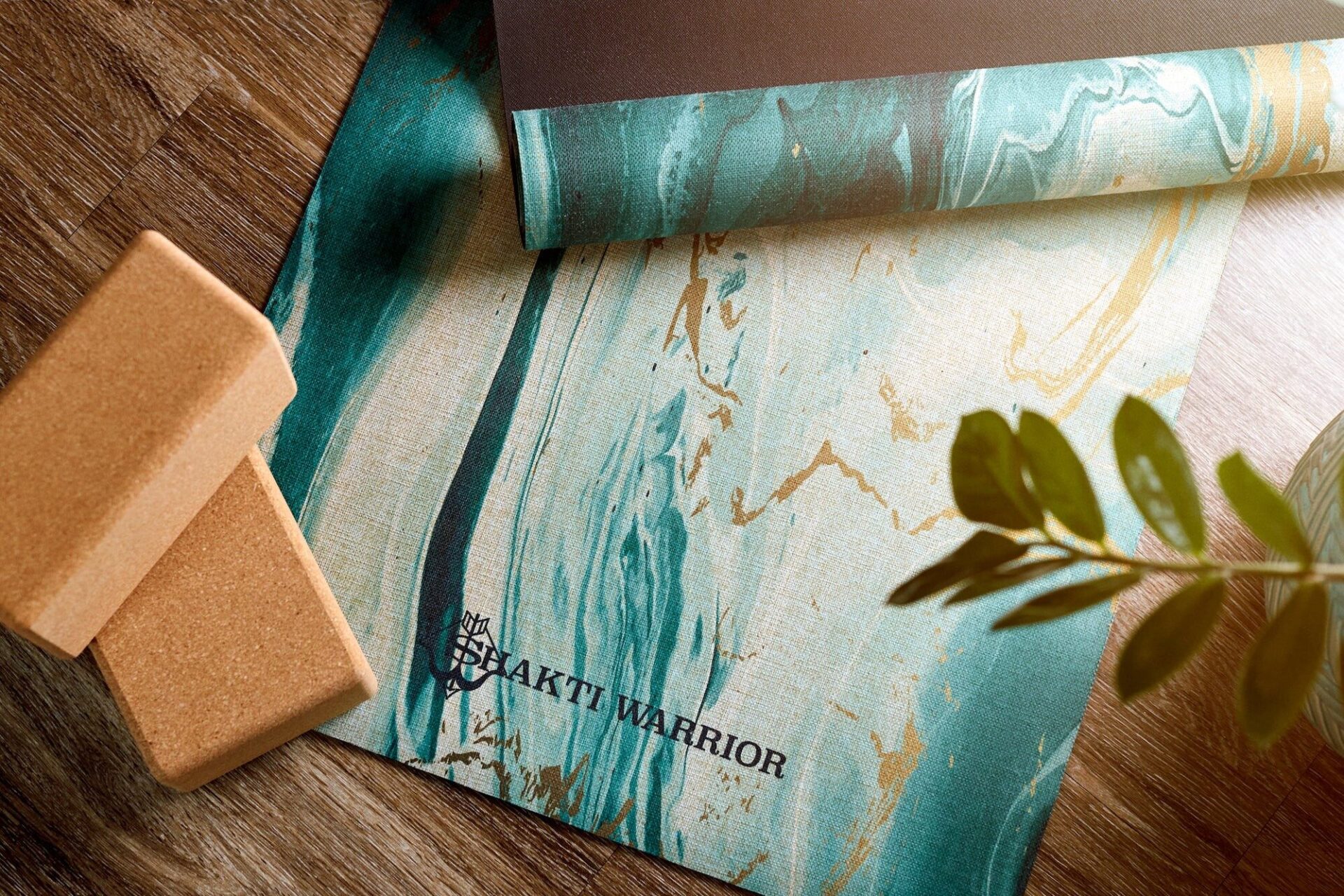
The solution: Look for mats made using organic cotton, jute, cork and hemp, with a resin-based anti-skid treatment, or a natural rubber backing.
Brands to explore: Yoga Land, Tarasa, Shakti Warrior
Plastic leaves you disconnected
‘The essence of yoga lies in connection,’ says Komal Jain, founder of Yoga Land, which makes organic cotton mats, and a long-time yoga practitioner. ‘When you meditate, the energy that passes through your chakra system needs to be earthed. When you use materials like plastic, TPE and PU, which are all insulating and, therefore, do not allow that energy to pass, you actually end up getting disconnected from the earth—and somewhere, from yourself.’
‘It’s also about frequency,’ adds Arjun. ‘When you practice yoga, or you meditate, you’re vibrating at a higher frequency. Materials have frequency, too. Natural fibres have a far higher frequency, with linen being the highest, whereas synthetic fibres tend to have a lower frequency.’ This is further corroborated by Shubham. ‘Polyester has the same frequency as a dead animal,’ he says. ‘That isn’t something you want to be putting on your body, especially while practicing yoga.’ The frequency theory, based on a 2003 study by theologian Dr Heidi Crawford-Yellen, hasn’t really curried favour in scientific circles. There have been no follow-up studies or peer reviews to either endorse or debunk the theory.
However, according to a 2025 paper, published in the International Journal of Biological and Pharmaceutical Sciences, comparing traditional plant-based and modern multifunctional wound dressings, the natural bioactives in plant-based materials promote healing and well-being. Several other, similar, studies have expounded the virtues of linen, especially, as a healing fabric. An animal-based study found linen-based dressings to even improve skin elasticity, while another discovered that it accelerates ulcer healing. Bottom line: Whether you believe in energy and frequency or not, fact remains natural fibres offer several antibacterial, antimicrobial and healing properties, which help you feel more grounded—and give off less odour! Synthetic fibres offer you none of these.
The solution: Pick natural fabrics, prioritising linen, followed by cotton and hemp, to stay better connected with your own body. Go for a mat made in cotton (preferably organic) or hemp, and accessories like cotton belts, and blocks and wheels in cork or wood, to be better connected with the Earth and with nature.
Brands to explore: Yoga Land, Akiso, Tarasa, Kshm, Proyog, Shakti Warrior, Kosha, Coreasana
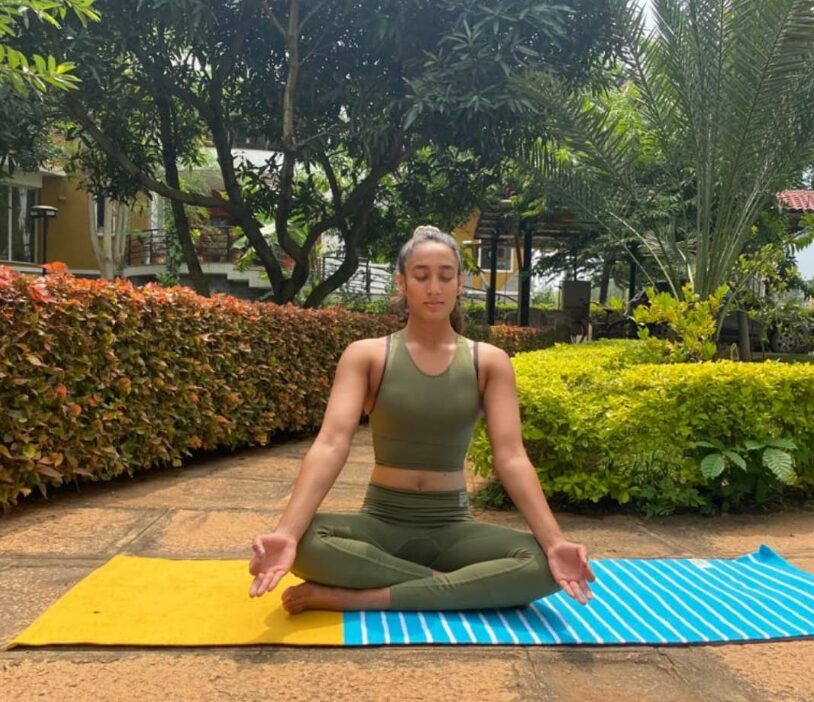
Yoga is not an aesthetic
Let’s be honest: Most yoga wear you see on the market, is just glorified athletic wear. ‘And most athletic wear is plastic,’ says Sonam Sobti, co-founder of yoga wear brand Akiso. ‘Yoga is about living in harmony with nature, and what you wear or use for your practice should reflect that.’
Let’s look at some of the central tenets of yoga, to understand this better. The first of the eight limbs (Ashtanga) of yoga, Yamas, tells us to live our lives with honesty, non-violence, non-stealing, self-restraint and non-attachment. In this instance, that translates to conserving resources and wearing what you have (not stealing from the planet and practicing self-restraint), buying from brands that work with renewable resources (not committing violence against the planet) and pay their garment workers a fair wage (not stealing from people), tell you what’s in your clothing (honesty), not wearing materials that are harming us (non-violence towards ourselves), not chasing an aesthetic (not getting attached to another version of ourselves). Yoga is also about observing Dharma, which also includes our duty towards ourselves, the planet and society. As much off the mat, as on the mat.
‘Your clothes should support your movement, your mood and your well-being—not work against it,’ reminds Shubham. ‘Natural fabrics are breathable, kind to your skin and don’t carry any chemical baggage.’ If you’ve ever look at a picture of any of the great yoga masters, you will notice them wearing very little clothing. The idea is for you to be able to move without restriction and connect with yourself. ‘While practicing, you need to be focused on your practice and not on whether your top is moving or shifting,’ adds Sonam. Now, we’re not asking you to start shedding clothes, just to be mindful of what you’re practicing in.
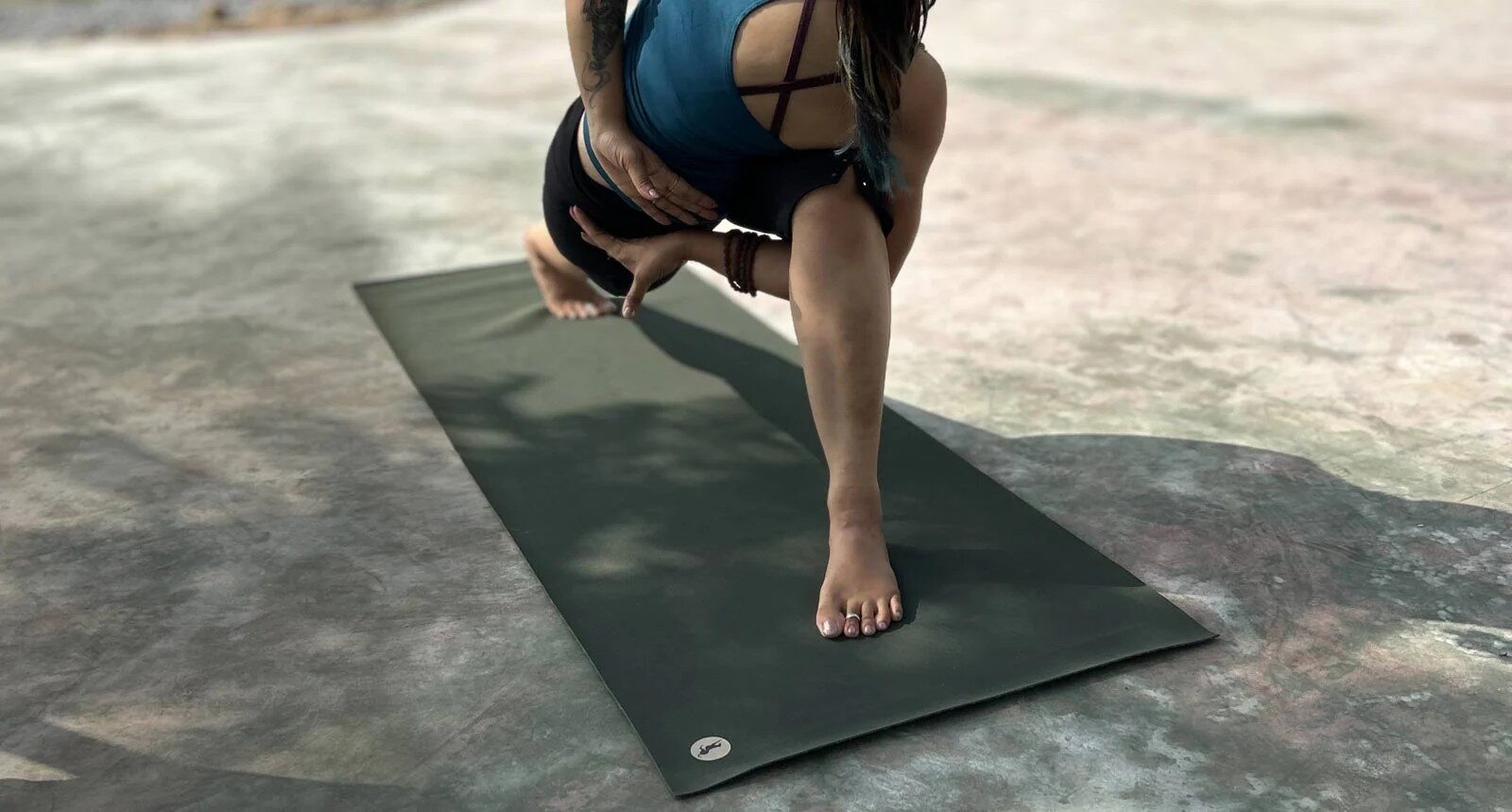
The solution: Look for clothes that allow free movement but have details, such as ankle bands or waist ties, that help your clothes stay in place and not fall on your face when you try an inversion.
Brands to explore: Akiso, KSHM, Tarasa, Proyog