
Lululemon is coming to India, in partnership with Tata Cliq. The Canadian brand will be launching a brick-and-mortar store, and will also be available for digital retail through Tata Cliq Luxury and Tata Cliq Fashion, in late 2026. The launch is part of a larger move by the yogawear and athleisure giant, to expand to international markets, increasing their number of global stores to 1,000 from the current 770.
Needless to say, there is plenty of excitement around this news, but should we, in India especially, be excited about Lululemon? Let’s break it down.
Lululemon was never really made for us.
Founded by Chip Wilson, in Vancouver, in 1998, Lululemon comes with a history of sexism, racism and fatphobia. In a 2005 interview to Canada’s National Post Business Magazine, Wilson revealed he’d picked the name ‘Lululemon’ because the Japanese alphabet doesn’t really have an ‘l’ sound, and with so many ‘l’s in the name, ‘it’s funny to see them (the Japanese) try and pronounce it.’ Especially ironic, given that their hero fabric, WarpstremeÔ, is developed in collaboration with a Japanese mill!
In 2013, when Legging Gate (Lululemon had been gradually devolving the quality of their fabric, till the leggings became practically see-through, pushing them to recall products, causing US $67 Million in lost sales) broke, he responded with ‘some bodies are just not the right fit for Lululemon,’ and blamed the rubbing of the thighs for the wearing out of the fabric. Through several other statements, Wilson made it amply clear that Lululemon was made for a certain kind of woman: Someone who was upper-middle-class, thin and white.
Given the poor PR Wilson attracted, he was removed as CEO and, subsequently, from the board, too. While he has had nothing to do with the operations at Lululemon since 2015, he remains their largest individual shareholder. And even though Lululemon has publicly issued statements to distance the company from Wilson’s views, time and again, this Business of Fashion report proves otherwise. With employees, past and present, speaking about the racial discrimination that seems inherent to the company, it seems to be not just loose statements but a legacy Wilson has left behind.
We’re just another market.
Lululemon, known for its tight, black leggings that retail for US $100, went public in less than a decade since its inception. The brand, which pretty much pioneered the athleisure category, declared a 77% year-over-year revenue growth, in 2007, with its IPO valuation billed at US $1.4 Billion. In 2019, Lululemon reported profits amounting to US $3.3 Billion. In 2024, the company publicly admitted to making losses, even as international sales were up 33%. In 2025, they reported profits were down by 11%, and that they were making 25% less sales in the US, which is their primary market.
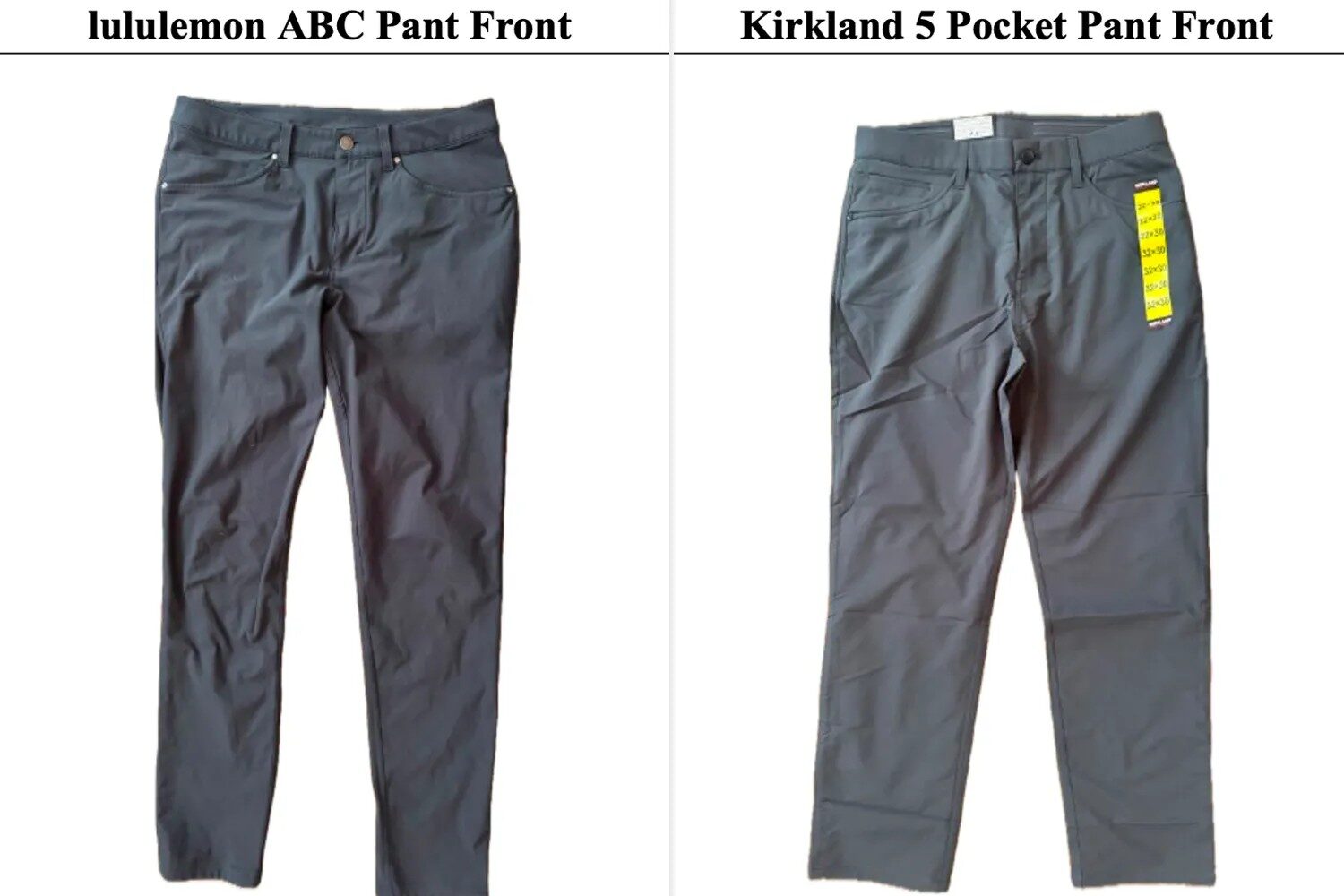
In July, Lululemon filed a lawsuit against Costco, alleging that Costco’s Kirkland Signature 5 Pocket Performance Pant was a dupe of their popular ABC pants. But this Business Insider report breaks down how the design elements highlighted by Lululemon are, in fact, common elements used by several designers in their pant designs, and that fabric quality and price point are more likely to be the key factors pushing consumers to pick one over the other. Business pundits have described this as a desperate attempt by Lululemon to reclaim their market in the US.
In light of this, and Lululemon’s projected vision of expanding to 1,000 locations, worldwide, up 230 from the current 770, the India launch is simply a cog in the wheel. The profits have to come from somewhere!
It’s a lot of ‘more plastic’.
Lululemon has built itself up as a brand that prioritizes innovation and good design, and over the last few years, they have been emphasising impact in all of their communications. But if you dig a little deeper into the materials they use, it’s really all plastic, albeit in varying degrees, but plastic nonetheless. In February 2024, Stand.Earth issued a statement claiming Lululemon has been exaggerating its earth consciousness claims. The non-profit requested an investigation by the Canadian Competition Bureau to investigate Lululemon for false claims around their greenhouse gas emissions, and environmental pollution, especially in light of Lululemon’s ‘Be Planet’ campaign. In their application, Stand.Earth has specifically highlighted the synthetic, non-biodegradable and non-recyclable nature of the materials used by Lululemon, and the impact of the enormous supply chain, adding that Lululemon has doubled its GHG emissions since 2022.
As per Commons, Lululemon is classified as a fast fashion brand. It also clocked in a score of only 52, on a scale of 100, on Fashion Revolution’s last Fashion Transparency Index, coming in just above Nike (at 50) and just below Adidas (at 56). Even though Lululemon has a free repair service and a takeback-cum-resale programme, it isn’t widely publicised. So sustainability street cred, without really wanting to put in the work. Besides, the programme is unlikely to be available in India, when the brand launches here—at least not for a while!
Stand.Earth has also raised concerns about Lululemon benefitting off ‘a carefully constructed image of environmental sustainability and wellness’, all the while building on fossil fuels, using ‘fracked gas’ and ‘polluting manufacturing.’ You can find out more about why plastic and wellness don’t really go hand-in-hand, here.

It is the neo-colonisation of yoga.
Even as Lululemon has started to branch out into other sections of activewear, it has always primarily positioned itself as a yogawear brand. Even if we were to look past their ‘hot, white girl’ aesthetic and their dodgy legacy, do we really need to be sold what is, rightfully, ours?
I think not. And so, to not leave you all wondering, here are seven homegrown yogawear brands you need to check out, instead:
- CarbonTree: Uses better materials, such as organic cotton, bamboo, SoronaÔ and recycled polyester. Plus, CarbonTree plants trees for every purchase.
- Shakti Warrior: Superior quality, ‘Lululemon styles’, and they support women SHGs. The clothing is mostly poly-spandex, but Shakti Warrior are experimenting with newer materials, to give you the same quality and aesthetic.
- YamaYoga: Self-proclaimed ‘Indian Lululemon and Alo Yoga’, YamaYoga’s designs are sexy and also majorly biodegradable.
- Akiso: The antithesis to Lululemon, Akiso believes yoga wear should be kind to the body and to the planet, and that you should not be worrying about your clothes, while practicing yoga.
- Kosha Yoga: Buttery on the skin, flattering for the body, Kosha Yoga uses a recycled polyamide fabric to create clothes that ‘move with you’.
- Kshm: Founded literally to try and answer the question: Why are all things yoga that are popular, today, western? Kshm is your one-step gateway to decolonise your practice.
- Tarasa: When we wear plastic while practicing yoga, are we helping ourselves or hurting ourselves? Tarasa is addressing this dichotomy through their linen and organic cotton yogawear.
- Athlos: The OG homegrown athleisure and activewear brand, Athlos has been working hard to make better materials and responsible practices mainstream.